A Pro Trainer's Guide to Basic Dog Training in Las Vegas
As a certified professional dog trainer here in Las Vegas for nearly a decade, I've worked with hundreds of dogs and their owners. The most common thing I hear is, "I just want a well-behaved dog I can take anywhere." The good news? That goal is absolutely achievable for every dog, regardless of age or breed. It all starts with a solid foundation in basic training.
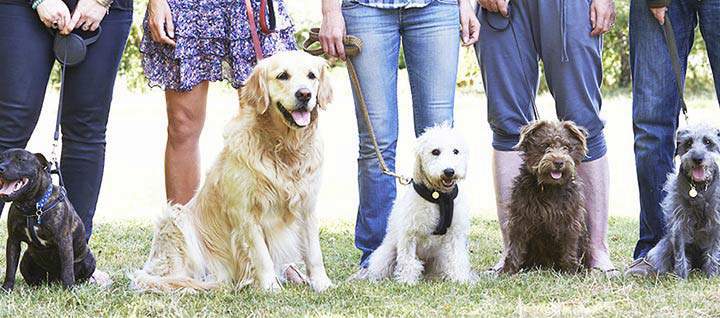
This guide isn't just a list of commands. It's the exact methodology I use with my clients, based on the science of animal learning. We'll focus on positive reinforcement, a method that not only teaches your dog commands but also builds a powerful, trusting bond between you. Let's get started.
- The Core Philosophy: Why Positive Reinforcement Works
- Getting Started: Your Training Toolkit
- Command 1: Sit (The Foundation)
- Command 2: Down (The Relaxation Cue)
- Command 3: Stay (The Impulse Control Builder)
- Command 4: Come (The Life-Saving Recall)
- Mastering the Loose-Leash Walk
- Troubleshooting Common Problems
The Core Philosophy: Why Positive Reinforcement Works
Forget old-school, dominance-based training methods. Modern, science-backed training is all about positive reinforcement. The principle is simple: dogs repeat behaviors that are rewarding.
When your dog performs a desired action (like sitting), you immediately mark that moment with a verbal "Yes!" or a clicker, and then provide a reward (a high-value treat). The marker word or click tells the dog, "That exact thing you just did? That's what earned you this reward." This makes communication crystal clear and turns training into a fun game your dog wants to play.
Pro Tip from Marcus: Think of yourself as a teacher, not a drill sergeant. Your job is to make it easy for your dog to succeed and to make learning fun. An enthusiastic, patient attitude from you will make all the difference.
Getting Started: Your Training Toolkit
You don't need a lot of fancy equipment. Here are the essentials:
- High-Value Treats: These should be small, soft, smelly, and something your dog absolutely loves (and only gets during training). Think small pieces of chicken, cheese, or commercial training treats.
- A Treat Pouch: For quick access to rewards. Fumbling in your pocket is too slow.
- A Standard Leash: A 6-foot nylon or leather leash. No retractable leashes, please! They teach dogs to pull and offer little control.
- A Quiet Space: Start training indoors with minimal distractions. Your living room is perfect. We'll take it on the road to places like The District later.
Command 1: Sit (The Foundation)
"Sit" is more than just a cute trick; it's a default behavior you can use to manage excitement and ask for polite behavior.
Step 1: Luring the Sit
- Hold a treat in front of your dog's nose.
- Slowly move the treat upwards and back over their head, towards their tail. Their nose will follow the treat up, and their rear end will naturally lower to the floor.
- The *instant* their butt hits the floor, mark the moment with an enthusiastic "Yes!" and give them the treat.
- Repeat 5-10 times. Keep it fun!
Step 2: Fading the Lure & Adding the Cue
- After a few successful lures, do the exact same hand motion, but *without* a treat in your hand. When your dog sits, mark "Yes!" and then reach into your pouch to give them a treat. This teaches them to follow your hand signal, not just the food.
- Once they reliably follow your empty hand signal, you can add the verbal cue. Say "Sit" *once*, then use your hand signal. Mark and reward when they sit.
- Eventually, the verbal cue alone will be enough.
Command 2: Down (The Relaxation Cue)
"Down" is a calming position, perfect for settling your dog at a pet-friendly brewery or when guests come over.
Step 1: Luring the Down
- Ask your dog to "Sit."
- Hold a treat at their nose, then slowly lower it straight down between their paws.
- Their nose should follow the treat down. As their head goes down, their elbows will bend and they'll lie down.
- The moment their elbows touch the floor, mark "Yes!" and release the treat on the ground between their paws.
- Repeat 5-10 times.
Step 2: Fading the Lure & Adding the Cue
Follow the same process as you did for "Sit." First, use an empty hand to lure the down, then reward from your pouch. Once that's reliable, say "Down," then use your hand signal. With practice, the verbal cue will be enough.
Command 3: Stay (The Impulse Control Builder)
"Stay" is a safety command that teaches impulse control. This is crucial in a busy city like Las Vegas.
The 3 D's of "Stay": Duration, Distance, and Distraction
The key to a rock-solid stay is to work on these three elements *separately* and increase the difficulty very slowly.
Step 1: Duration
- Ask your dog to "Sit" or "Down."
- Say "Stay" with a clear hand signal (like a flat palm facing your dog).
- Wait for just *one second*. If they hold their position, mark "Yes!" and give them a treat *in their position*. Then release them with a cheerful "Okay!" or "Free!"
- Slowly increase the duration to 3 seconds, then 5, then 10. If they break the stay, no big deal! Just calmly reset them and try again with a shorter duration.
Step 2: Distance
- Once your dog can stay for 10-15 seconds, add distance.
- Ask for a "Stay," then take just *one step* back. Immediately step forward, mark "Yes!" and reward.
- Gradually increase the distance, one step at a time.
Step 3: Distraction
This is the final frontier. Start with very mild distractions, like someone walking across the room. Practice in your yard before taking it to a public park. Practicing a short "stay" on a quiet corner of a patio at The District is a great real-world test.
Command 4: Come (The Life-Saving Recall)
If your dog learns only one command, this is it. A reliable recall can prevent them from running into a busy street or getting lost in the desert.
The Golden Rule of Recall
NEVER punish your dog for coming to you, no matter how long it took or what they were doing before. Coming to you must *always* be the best, most rewarding thing they can possibly do.
Step 1: Building Positive Association
- Start indoors. Sit on the floor a few feet from your dog.
- In a happy, excited tone, say your dog's name and then "Come!" (e.g., "Max, Come!"). Open your arms wide.
- When they start to move towards you, praise them enthusiastically ("Good boy, good boy!").
- When they reach you, give them a "jackpot" reward: several high-value treats, one after another, along with lots of petting and praise. Make it a party!
- Practice this in short bursts throughout the day.
Step 2: Adding Distance and Mild Distractions
Practice in your backyard on a long leash. Have a partner hold the dog while you walk away. Call them with the same enthusiasm. The long leash is your safety net to prevent them from running off if they get distracted.
Vegas-Specific Tip: A strong recall is non-negotiable if you ever plan to visit unfenced desert areas like the outskirts of Red Rock. Practice relentlessly in safe, fenced areas first.
Mastering the Loose-Leash Walk
Leash pulling is the #1 complaint I hear from owners. The reason dogs pull is simple: it works! It gets them where they want to go. Our job is to teach them that a loose leash is what makes the walk continue.
The "Be a Tree" Method
- Start walking. The moment you feel tension on the leash, stop moving. Stand still and silent like a tree.
- Wait. Your dog will eventually get frustrated and turn to look at you or take a step back, creating slack in the leash.
- The *instant* the leash goes loose, mark "Yes!" and start walking again.
- Repeat this every single time they pull. Your first few walks will be slow, but your dog will quickly learn that pulling stops the fun and a loose leash makes it start again.
Troubleshooting Common Problems
"My dog isn't food-motivated." - Every dog is motivated by something! If they don't like your treats, try a higher-value one (real chicken, hot dogs). If that fails, use their favorite toy or enthusiastic praise as the reward.
"My dog gets too distracted outside." - This means you've increased the difficulty too quickly. Go back to practicing in a less distracting environment. Master the commands indoors before you try them in the yard, and master them in the yard before you try them at a park.
"My dog just doesn't get it." - Keep training sessions short (5 minutes max) and end on a positive note. If you're getting frustrated, your dog is too. Take a break and try again later. If you're truly stuck, consider hiring a certified professional trainer. A few sessions can make a world of difference.
Training is a journey, not a destination. By investing time and patience into these foundational commands, you are building a lifetime of clear communication and mutual respect with your dog. You're giving them the skills to be a confident, well-behaved member of your family, ready to enjoy all that pet-friendly Las Vegas has to offer.
About the Author
Marcus Rodriguez, CPDT-KA, is a Certified Professional Dog Trainer and the lead behavior expert for Las Vegas Paws. With over 8 years of experience, he specializes in positive reinforcement methods to help Las Vegas families build stronger bonds with their dogs. View all our expert contributors →